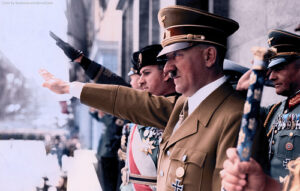
في الصورة الزعيم أدولف هتلر و هو يقوم بالتحية النازية
في جوان 2004، كنت جالسة علي بعد أمتار من آية الله حجة الإسلام السيد الإمام خامينائي و أمامي الشعب الإيراني، النساء مفصولات عن الرجال.
كنت أستمع إلي ترجمة خطابه من اللغة الفارسية إلي اللغة العربية و في لحظة ما هتف الشعب الإيراني برفع أذرعتهم بالضبط مثل التحية النازية و بدأوا بترديد :
لبيك يا حسين
لا شعوريا فعلت نفس الشيء و هتفت بصوت منخفض :
لبيك يا حسين
لبيك يا رسول الله
لبيك يا ربنا تعالي يا مالك الملك…
بدأت تنهمر الدموع خلف نظارتي الشمسية السوداء و أنا أردد بقناعة تامة “لبيك يا حسين لبيك يا رسول الله لبيك يا رب العالمين.”
ها أن إيران الإسلامية لقنت بنو صهيون درسا لن ينسي
بالرغم من الخيانة و الخديعة
بالرغم من عدد القتلي من علماء و قادة عسكريين و أكثر من ألف شهيد من المدنيين، بعد 12 ساعة من العدوان الصهيوني إستعادوا التحكم في زمام الحرب.
لماذا ؟ لماذا هم نجحوا في ذلك و كل دول نظام التجزئة العربي لم ينجحوا في ذلك و فشلوا في حروب 47 و 67 و 73 ؟
لأنهم لم يؤمنوا فعليا بلا إله إلا الله محمد رسول الله علي خلاف أهلنا في إيران فهم آمنوا بلا إله إلا الله محمد رسول الله و كما قال لي أحد الديبلوماسيين الإيرانيين “نحن قوم أعزنا الإسلام و هيهات منا الذلة.”
يا أيها القراء الكرام راجعوا أنفسكم فالموت تدور حولكم طوال اليوم و ستحصدكم لا محالة اليوم أو بعد خمسين سنة، فملك الموت سيقبض أرواحنا، فماذا عسانا نقول لربنا تعالي ؟
إنه الواحد الأحد و في حضرته لا كذب و لا إلتواء…
حضروا أنفسكم…
ما يجري الآن في غزة سيصل إليكم لا محالة إن لم تغيروا ما بانفسكم و القاريء لكتاب رحلة إلي دار الآخرة سيدرك أن الجحيم آت آت آت…
